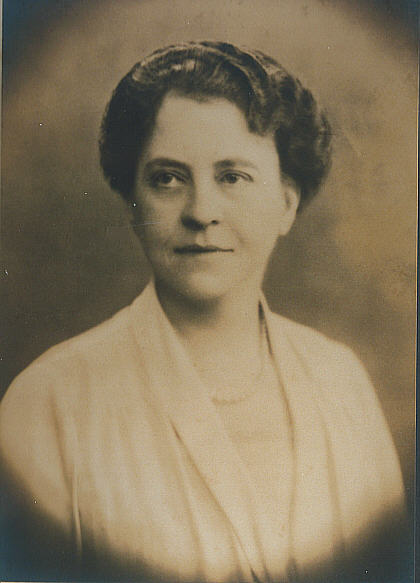
SKARRATT FAMILY OF KINGTON, HEREFORDSHIRE
|
Site Listings
|

"First and last in battle"
It may be genuine but probably does not apply to all the Skarratt families. This based on a family that went to Ireland. There are many sites with various crests etc but doubtful connections to the families concerned as is the case with Skarratt.
From what I have seen I would not take them to seriously.
|
|
SKARRATT WEBSITES
|
| Main Skarratt site
SKARRATTS OF WORCESTER
|
| |
| SKARRATTS OF LONDON |
| |
| This is a private site and has no proffesional funding or connections. It is entirely edited in my own time and at my expense.
I have a vast amount of information that has been collected but not all of it is on the sites so far. Time does not allow to edit it all.
I am always welcome to receive contacts with info or questions. The exchange of info for free is the best way to judge if a persons interest is genuine in their family history, I will not be updating this page, I have decided to compile all the info in one small booklet for familly members. |
|
| |
June 2026 |
|
|
KINGTON is an historic market town on the English/Welsh border. It is ideal base for touring Offa's Dyke, Hay-on-Wye & the Brecon Beacons. |
INTRODUCTION
This is a family that has a lot of information available about it and is the subject of some very interesting events.
The family lived in London up to 1780's, when they moved to Kington, Hereford with Carelton Skarratt and his family.
He set up as a clockmaker in the town, he was apprenticed in London to Jane Saxby in 1768 so he was probably continuing his trade from London.

This table above is where I am currently researching the descendants of Peter & Anne. There has been some new info which has brought into question the connections to Richard and Robert. There are so many Richards and Roberts that exactly which info is correct is not resolved as of now.I now believe John (1760-1860?) was the son of Robert & Sarah. He joined his brother Charles in Worcester.
Skarratt family tree from 1700 to 1900. basically the Kington era.

Note: This tree is a little bit out of date, please check with me if you have a query on it. 
LISTINGS IN DIRECTORIES
Directory of Herefordshire for 1858 by Edward Casey & Co:
page 169. Skarratt T.C., High, St Kington. (under Linen & Woolen Drapers)
Littlebury's Postal & Commercial Directory of Kington, 1867:
page 310. Skarratt, Thomas Carleton, Silk Mercer, Clothing. High St
page 311. Skarratt, Mrs. Elizabeth, Fancy repositories, Jeweler. High St.
page 307. Skarratt, William Carleton, Draper's Asst. Church St.
page 300. Skarratt. T.C. Kington . Commissioners under local board.
Kelly's 1900:
page 116 Private residence, Skarratt T.C. 11 High St.
E.R.Kelly Post Office Directory 1870
page 342. Skarratt. Henry. Watchmaker & Toy Dealer. High St.
page 342. Skarratt. T.C. Draper
SHOPS & CHURCHES ASSOCIATED WITH THE FAMILY
 |
|
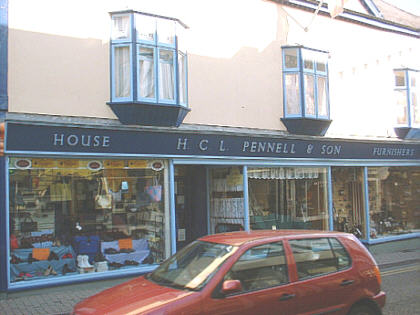
10 HIGH STREET, Kington.
Thomas Carleton Skarratt (Author of the Diaries) lived in No.11 and ran his drapers business from No.10 from c1858 to c1876 |
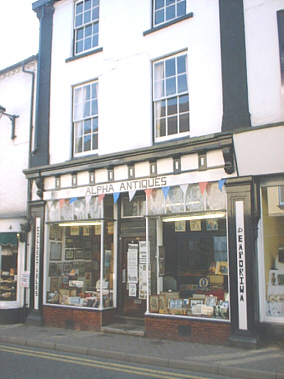
45 HIGH STREET, Kington
The watch & clock business of Thomas Carleton Skarratt and later in 1859 Elizabeth Skarratt is still here. Also Henry Skarratt her son was listed up to at least 1871 |
| . |
. |
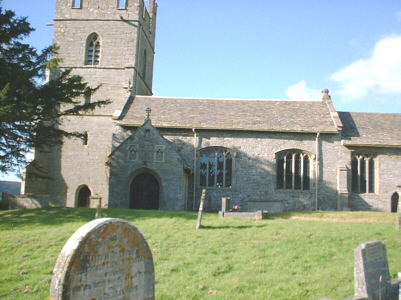 |
Old Radnor Church in Powys. Wales. about 4 miles from Kington in Herefordshire. England, is famous for its organ case, medieval screen, stained glass, and large font. The church is set in a commanding position looking out over beautiful countryside, if I was to be buried anywhere, this would be the place I would choose...
...
In the foreground is the gravestone of Elizabeth Sarah Skarratt nee Stephens 1824-1885. also buried alongside her here is Alice Ann Ward, nee Skarratt 1862-1904 ..
|
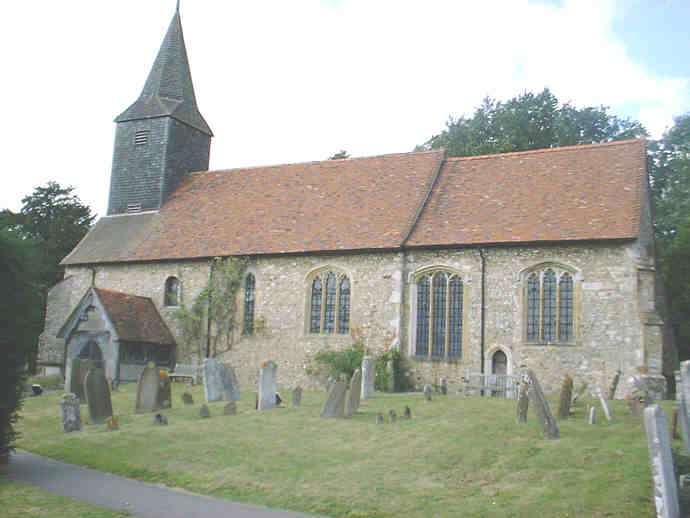 |
KEMSING church, Kent. St Mary the Virgin.
Located in Kent just north of Sevenoaks is the small village of Kemsing and its village church. The church was the parish of Rev. T.C. Skarratt from 1889 -1908 and he was responsible for improving the fabric of the church including the following windows:
- East window: 3 lights. Christ in Majesty by Comper. 1902. Rev T.C. Skarratt in memory of his mother.
- Sanctuary North Wall: 2 lights in frame inserted 1891. The visitation, by Comper about 1902. In memory of Elizabeth hall.
- West window: 2 lights. The Annunciation, by Comper. 1911. In memory of Rev T.C. Skarratt from his sisters.
- North Aisle: 2 lights. ss. Thomas & Richard, by Comper. 1911. in memory of Rev. T.C. Skarratt, from his friends
|
Buried at Kemsing are:-
T.C.Skarratt 1857-1908, Amy Carleton Skarratt 1866-1927, Charles Carleton Skarratt 1824-1900, Daisy Wren Skarratt 1877-1942, Emily Carleton Skarratt 1862-1923, Lucy Anne (Minnie) Skarratt 1863-1934, Violet Hall Skarratt 1877-1953. |
FAMILY MEMBERS
CARLETON SKARRATT
He had three daughters and one son, his son Thomas Carleton 1776 - 1838, followed his father into the profession in Kington.
Thomas married Elizabeth ball in 1802 and they had 10 children all born in Kington. see family tree. Three of the sons, Henry, Thomas and Charles each pursued different careers and made their mark on the society of the time.
Henry 1809 - 1888, continued the family clockmaking tradition in Hay-on-Wye and then Kington.
Thomas 1818 - 1909, was initially a linen draper in Kington, Author of the Diaries..
Charles 1824 - 1890, was a Hotelier, and some say he left to avoid debtors, and emigrated to Australia in1852.
Henry Carleton 1809 - 1888
Henry was the second son, born in Kington and the only one to become a clockmaker amongst his brothers. He was probably trained by his father and in 1835 he worked at a premises in 10, Castle Street, Hay-on-Wye. It would appear that when his father died in 1838 he returned to Kington and assisted his mother in the shop at 45 High Street. When his mother died in 1871, Henry who retired in 1870, moved to Ludlow., where he later married Sarah Evans in 1874.
The business was taken over by T. J. Coleman. Henry lived at Gothic Villa, Gravel Hill, Ludlow, where he died in 1888 One watch has come to light in Australia would seem to confirm that Henry actually had a business in Ludlow. A mantle clock made in Ludlow and a gold watch made by H.C. Skarratt , Ludlow #55743. Henry also tuned pianos, led the town band and managed the gas works.
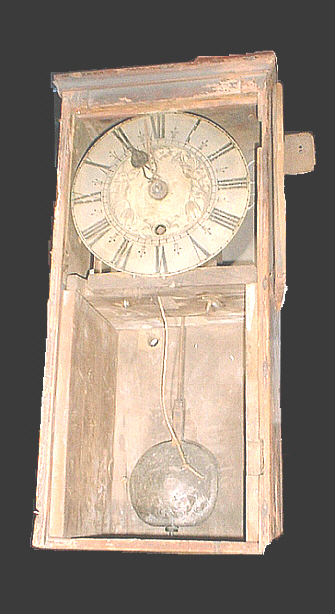
It was Henry who in January 1841, built what must have been a unique creation for the time, a gas clock. It was mounted on the outside of the shop and displayed the time not only in the daylight, but also at night! What Henry had done was to connect the local town gas supply to a clock mechanism to produce what is undoubtedly the only clock of its type ever built. There would be a pilot light by day, and at night the clock mechanism would turn a cam that operated the gas cock and raised the flame up to illuminate the clockface. How it actually worked in detail is not quite clear, but we have Mr. Barnston's idea on the operation. "He knew that a beveled gear wheel attached to an arbour through the clock plates to the motion wheel on the front of the movement was often used to operate the hands of a second subsidiary dial. He therefore adapted this principle by attaching a
rectangular brass plate with a slot cut in each end. Behind this was a gas tap with a round lead counterweight. The clock is in the archives of Hereford museum, and having seen it, I can say it is not in good repair and it is not obvious how it works due to bits missing. The clock itself was in constant use as a public clock at the shop until 1920.
The MAZEPPA COACH timetable for 1850's had a note reminding people that the departure time was London Time, and not by Skarratt's clock local time. The coming of the railway in 1853 cost Herefordshire eleven minutes.
For the technically minded clock enthusiast this is the description of the clock:-
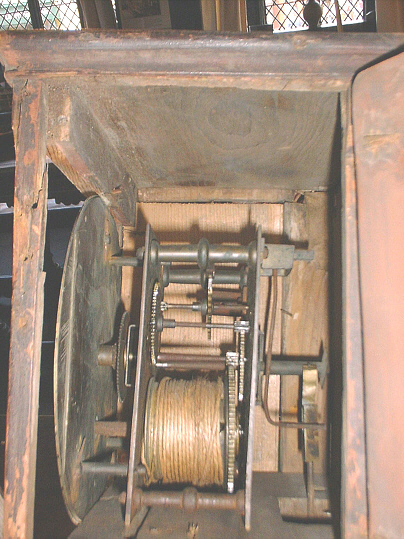
It had a brass chapter ring 6½" Dia., which was used in a single handed 34 hour movement, and fitted with a brass dial centre so that winding hole could be positioned. The movement was a barrel from a long-case movement, wound from the front of the dial to lift up the weight. hour and minute hands were fitted and the anchor escapement released 16 inches long. Henry knew that a beveled gear wheel attached to an arbour through the clock plates to the motion wheel on the front of the movement was often used to operate the hands of a second subsidiary dial. He therefore adapted the principle by attaching a rectangular brass plate with a slot cut in each end. Behind this he placed a gas tap fitted with a round lead weight on one end and a narrow arm on the other to fit into the slot. The gas jet was placed at about eight o'clock on the bottom LH side of the dial.
The case is 17" long, 7½ inches wide and 6 inches deep.
|
|
 |
| It can be seen how bad the condition is from this front view. The front panel has been removed. |
RH side view showing barrel and string replacing original cat gut for weight suspension. |
Charles
Because of the discovery of gold at places like Ballarat, Charles opened a hostel for the miners, many of whom had come from the failed tin and copper mines in Cornwal. Walter Hall, who came out with Charles, married to Charles's sister Elizabeth, started a store supplying the daily necessities to miners and their families.
It was in Geelong that Charles married Mary "Nell" Ellen Wren from London, in 1854. They moved to Melbourne and then Sydney and by then had 13 children. From Kings Cross, Sydney, Charles moved to Rockhampton to the new goldfields and opened a very superior hotel. There was another whiff of aristocracy about the Royal Hotel when Charles Carleton Skarratt bought it for £25,000 in 1872. Skarratt's wife was reputed to be a Countess in her own right. Skarratt made a pile through his association with the pioneers of the Mount Morgan gold field, and in 1882 he let the hotel to Thomas Asche, father of the celebrated Oscar of "Chu Chin Chow" fame. Asche senior, according to contemporary accounts spent most of his waking hours reclining in a chair beneath the umbrageous foliage of the potted plants in the lobby. Charles became very rich through his connection to his cousin,
Walter Hall and the Mount Morgan Mining Company. There is a shady story here, basically the Hall's being the villains and Charles as a comparatively innocent participator. Walter Hall had managed to set up a company with two brothers called Morgan, who had scraped a living by farming until the gold was found. A mountain of gold virtually! Walter Hall astutely purchased any shares being sold in the company and managed to ease control away from the Morgans Charles was invited to buy a block for around £6000 and from this and the hotel profits he moved back to Sydney and built himself a large house at Summerfield in 1881. He named it Carleton, and today it serves as a children's home.
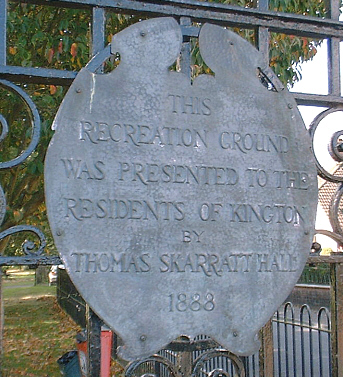
Walter Hall returned from Australia to Kington and tried to pay off his benefactors from whom he had borrowed money to emigrate. But because they had all died or moved away, Walter gave Kington the 13 acre Recreation ground in 1888. The gates are dedicated to Walter Hall for his gift to the people of Kington.
|
|
The plaque on the gates in Kington recreation as described above.
"This Recreation ground was presented to the residents of Kington by Thomas Skarratt Hall 1888". |
|
|
|
|
Charles returned to England in 1881 and settled in London in style, with eight children. The daughters were sent to finishing schools in England and Paris and Sydney went to Monkton Combed School in Devon. Sydney went up to Cambridge, and in 1890 there was Carleton Fisher Skarratt of Worcester, a cousin of Thomas.
Thomas
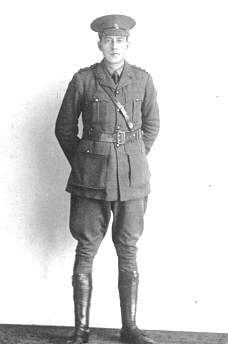
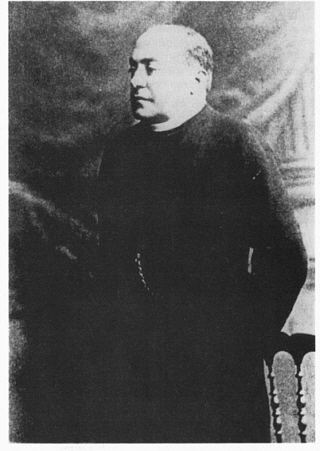
Thomas Carleton or Carleton to his family returned from Australia and graduated in 1884, ordained in 1885. He was referred to as "Australian Tom" by his namesake Uncle in his diary. He was curate at Christchurch, Paddington from 1886-1889, and then became vicar of Kemsing on 13th December 1889, presented to the living by Lord Sackville, Lord of the Manor.
Initially he lived in London until the vicarage was ready for him. He enlarged it an added a chapel. It is now a youth hostel on the Pilgrim's Way. Life at the vicarage was gracious and one of his guests has said that in quite a large circle of the literate of the day KEMSING vicarage was noted for the refinements of its hospitality.
In 1896 Mr. Skarratt commissioned John Ninian Comper to restore and redecorate the chancel of St Mary's church. And so it is that, thanks to the goldfields of Australia, we have a wealth of beauty and much of it in gold leaf in the church today.
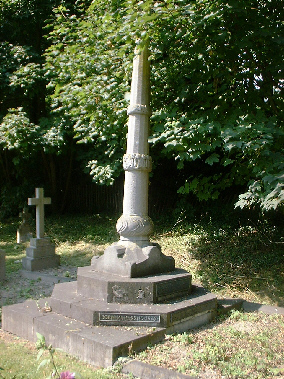
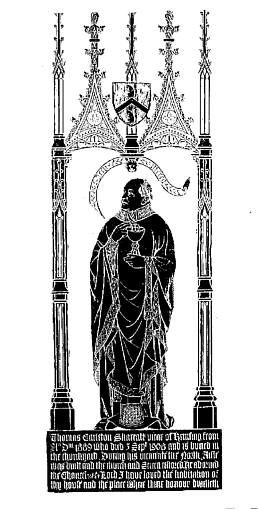
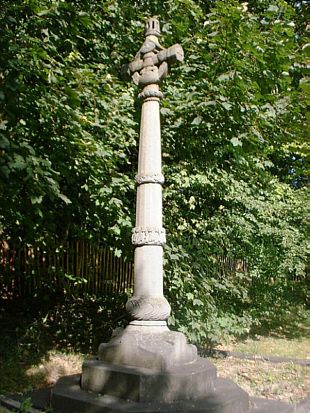
When his parents died they were buried in Kemsing, as were three of his sisters. Thomas died in 1908, the group of tombstones are in the north-east corner of the churchyard with the grave of Thomas. There is a monumental brass in the middle of the church floor put there in memory of "Australian Tom".
|
|
|
| Thomas Carleton Skarratt, Vicar of Kemsing |
|
 |
|
| Monumental brass to Thomas in St Mary's Church, Kemsing |
Grave of Thomas in Kemsing, St Mary's Church grounds |
Inscription reads:-
Thomas Carleton Skarratt vicar of Kemsing from 21st December 1889 who died 3rd September 1908 and is buried in the churchyard. during his vicariate the North Aisle was built and the church and screen restored. He adorned the Chancel. Lord I have loved the habitation of thy house and place where thine honour dwellith |
|
CHARLES SYDNEY SKARRATT. 1870-1942.
Son of Charles Carleton Skarratt 1824-1900 who made his fortune in Australian gold mines.
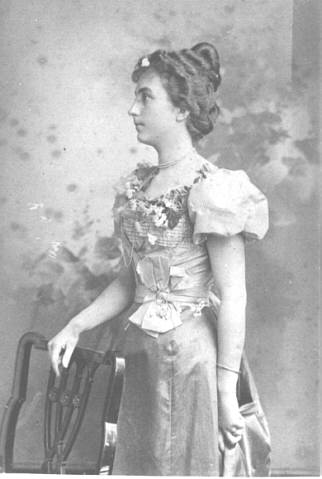
Charles was born in Australia apparently in the Royal Hotel in Sydney. He returned to England and had a varied life He did not have to work for a living and basically lived the life of a gentleman although he did involve himself in some acting. He lived for some time as a resident in his apartment in the Savoy, one of the top hotels in London. He was the assistant manager at the Alhambra Theatre in London and the theatre had a reputation for a place to find a rich husband for certain ladies. It seems that is when a certain American Mabel Loeb nee Power came into his life. She was a reasonably famous actress in her own right and continued acting in England. Mabel had already caused a major stir in the United States with a marriage when she was 20 to a Mr Walter F. Loeb a young society swell and his lavish spending. When his father found out he gave his son two options, stay married or lose his inheritance which would be substantial. So after one day of marriage Mabel was deserted and the marriage dissolved. so Mabel got a boat to England and joined her friends at the Alhambra looking for wealthy husbands. The Alhambra had a certain reputation for liaisons involving young ladies and wealthy gentlemen. The shows had an extraordinary long interval of approx one hour where the ladies some scantily dressed could ingratiate themselves on prospective husbands. Wealthy society gentleman like Lord Crichton and Charles enjoyed the attentions of Mabel and her actress friends and Mabel was only too happy to promote their own chances of a rich suitor.
This obviously because worked after some other flirtations she married Charles in July 1901 at St Pancras registry office, London. Mabel would now seem to be set for life of luxury living in the Savoy Hotel, but that did not seem to suit her way of life as she was soon found to be associating with the Earl De La Warr, Gilbert Sackville in 1916 at the Cooden golf club. Despite initially denying adultery in court on May 1916 divorce followed although Charles was willing to take her back, until he found out she was carrying on behind his back after promising to end the affair.
A book "Archive of the Heathens" contains some interesting accounts of a secret society on the Mauretania 1909-1918 with Mabel Loeb involved. While Mabel was in London and performing on stage every night Mabel's brother Richard, who was due to inherit a small fortune about $1.5 million dollars from his uncle Pierce Power who was a 49er on the Alaska gold mines. But just when he was almost in possession he died. So Mabel inherited and she could now well afford the high life.
FAMILY MEMBERS
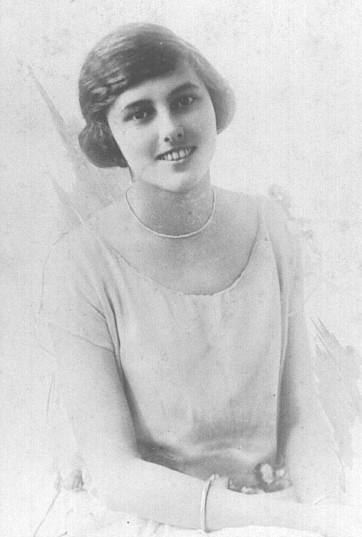
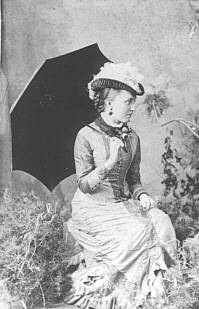
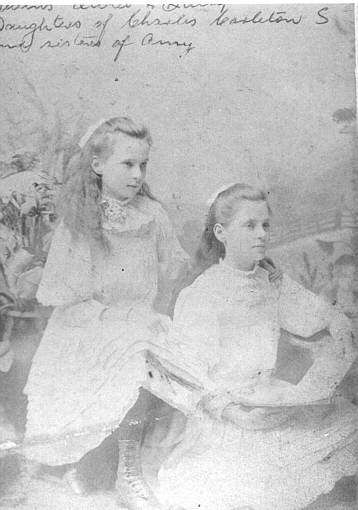
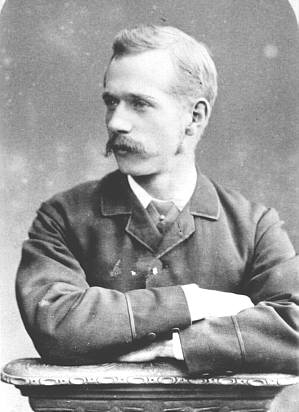
Courtesy of the late Tony Skarratt
Skarratt Stone

The location of this stone remained a mystery to me until recently. Thanks to Mike Browell & Ian Winterburn sending me information I now know the exact location and a little more about its history.
The location is Laund Clough. 165992 (approx), Up the Little Don Valley from Langsett.
The next problem is to work out who it was named for.
I was sent this information:
THE SKARRATT STONE During the last Bradfield boundary expedition (28th December 2002) a small group split from the main party to investigate Skarratts stone....we found the stone and needless to say questions were asked as to what it was? and who was Skarratt? An enquiry was made to one of our contacts in Peolstone Footpath Runner who's patch it is in, and a reply has been received from that well known Bob Graham enthusiast... Andy Plummer. The answer is in the form of a couple op letters reprinted from Peak & Pennine.
Who was Skarratt?
Does any reader have any information on the stone carved with "Skarratts Stone 1894" which I saw recently while walking on the way up Laund Clough on the Langsett Moors? It obviously commerates someone, but who and why?
Josie Wilson< Sheffield.
In response to Josie Wilson's request for information about Skarratts Stone in Laund Clough on the Langsett Moors in the last issue, the following details were taken from an article by G.H.B. Ward in the Clarion Ramblers Handbook for 1934-35.
"At the time the carving was made, the shooting rights over the western section of Langsett moors were owned by a Sheffield based firm of cutlers, Harrison & Harrison. Skarratt was either a partner in the firm, or had a financial interest in it, and the carving was done on the orders of Mr. George Howson.
Skarratt was a member of the shooting party from about 1887 to1897. He supposedly live in London and made his fortune from an earlier time spent in Australia, possibly gold mining. The shooting party would take lunch at the (then) shooters hut about 400 yards below the confluence pf the Loftshaw and Laund Clough streams. On the walk from the huts to the shooting buts near the head of Laund Clough, Skarratt made a practice of taking a ten-minute rest (and a toddy of whisky) at this stone.
According to Ward, one peculiarity of Skarratt was that when he was in a mist on the moors he showed palpable signs of fear.
John Milner, Sowerby Bridge near Halifax.
This answer seems quite comprehensive but if Skarratt was in the shooting party until 1897 why is the date on the stone 1894?
Richard Hakes
I will try to answer the points made in the above info. There are I believe two people who this could be applied to, William Carleton Skarratt and Charles Carleton Skarratt, two brothers who left Kington and went to Australia. Charles made his money in the Morgan gold mine (see above bio on Charles) . He obviously came back wealthy settling in London, being able to send his daughters to finishing schools in Paris and Sydney and his son to Cambridge.
I would like to Find out more about the firm of Harrison & Harrison, and if Skarratt was involved in some way. There is an earlier connection to a Harrison family, but this may be just coincidence.
.
Listing of Skarratt in Crockfords
SKARRATT, CARLETON FISHER. Adm. pens at Emmanuel, Apr. 17, 1890. S of John Martin Esq., of Vernon House, Lower Wick, near Worcester. B. 27 July 1871. Schools, Blasdell's, Tiverton, Worcester and Oakham. Migrated to Downing. Oct. 8, 1890. Matric. Michs. 1890. Went to America. (Blundell's Sch. Reg.; Oakham Sch. Reg.)
SKARRATT, CHARLES SYDNEY. Adm. at Trinity Hall, 1889. S of Charles Carleton, of Summer Hill, Sydney, N.S.W., Australia, Matric. Michs. 1889. Brother of the next.
SKARRATT, THOMAS CARLETON. Adm. pens. (age 22) at Pembroke, Oct 1. 1870 {Eldest} s. of Charles Carleton, Esq. of Sydney, Australia. B in Victoria. Matric. Michs. 1879. Migrated to Downing. Oct 19, 1882; B.A. 1884; M.A. 1889. Ord deacon (London 1886; priest, 1887; C. of Christ Church, Paddington, 1886-9. V. of Kemsing, Kent, 1889-1908. Died Sept 3. 1908, aged 50. Brother of the above. (Crockford; The Times, Sept 4, 1908.)
GOLD MINE IN AUSTRALIA
from "Sydney'S Highways of History" by Geoffrey Scott
W.R. Hall managed operations in New South Wales for several years; and his career, as described in Percival Serle's Dictionary of Australian Biography, was spectacular. Hall was born in Kington, Herefordshire, England, in 1831, and arrived in Sydney on 14 February 1852. After a spell on the Victorian goldfields, he became connected with Cobb & C0., first as an agent and late as a partner in Rutherford's syndicate. When gold was discovered at Mount Morgan in Queensland, Hall invested heavily in the Mount Morgan Gold Mining Company and made a fortune of several millions. He retired from Cobb & Co. in 1885, and for some years before his death on 13 October 1911, he was a director of the Mount Morgan Company. His widow (Elizabeth R. Kirk) founded the Walter and Eliza Hall Trust with a gift of £1,000,000.
from The Lights of Cobb & Co. by K.A.Austin
*********************
"Australian Tom"
Since writing the article "An Australian Connection" for the summer issue of 'The Well', more information about the Skarratt family has come to light. We now know that there was once a linen draper who lived in the small market town of Kington in Herefordshire. Being a draper he was one of the first to hear of any deaths that occurred in the town, for he supplied black crepe for hat bands and black ribbon for arm bands, or even bolts of suitably dark material for making up mourning clothes. These deaths were all recorded in his diary, often with comments on the manner of death and the nature of the lost one. His diaries also a reveal a lively interest in everything that went on in the town. Very keen on all manner of sporting activities, he commented on the football and cricket matches between the boys of Kington and the neighbouring towns and villages. He
described fishing trips made with his friends; skating outings with his daughter when the severe winters of the 1880's froze the local ponds; and otter hunting up and down the local rivers and brooks. His comments on musical events are somewhat pithy, being inclined to describe the effects of the town band or the church choir as producing plenty of noise but not much music. The annual horticultural shows are dealt with lovingly, giving full lists of prizes won by himself-and they were considerable in number. Agricultural shows were always attended and market trends noted. It is interesting to find the misdemeanors of the young were much the same as they are today, such pranks as taking gates of hinges and leaving them in other people's gardens being mentioned.
He was named Thomas Carleton Skarratt, after his father, and the main purpose of the diaries was to keep the scattered members of his family in touch with each other and with the events in their home town of Kington, by posting copies of the diaries from one family to the next, from Kington to Ludlow; to Wigan; Sydney or Melbourne, etc. Two of his younger brothers were William and Charles. William was at first in partnership with him in the draper's business, but later decided to emigrate to Australia to join Charles, who had already gone there. With a neighbour Walter Hall, who had borrowed money from his friends to enable him to get to Australia. Charles had settled in Geelong by 1853, near the goldfields in Victoria. Here he set up a "hotel" for miners and their families, while Walter opened a "store". Both did well and in 1854 Charles married a London born
girl called Mary Ellen Wren. This couple (Charlie and Nell in the diaries) raised a large family in Geelong, Melbourne and Sydney, thirteen in all, of whom nine survived. Walter Hall married the diarist's elder sister, Elizabeth (Liz), and both families prospered in the new country, moving from Geelong to Melbourne and from there to Sydney, where eventually in 1881 a large house was built for Charles, called "Carleton". (It is still there and is now a large children's hospital at Summer Hill.)
In 1878 Charles and Walter had become shareholders in the Mount Morgan Mining Company in New South Wales, and they were rich enough to make visits to England. The diary entry for the 12th. of February, 1878 reads "A letter to hand to Henry (another brother) and self in which he mentions the all but decision to send Tom to England". The "all-but" soon became definite, because on the 23rd April came a letter from Tom (who was the eldest son of Charles and Mary Ellen and was called Thomas Carleton Skarratt after his grandfather and his uncle the diarist) to announce that he was in New York and would leave for England on 18th April. On arrival Tom went to stay with his uncle Henry in Ludlow on 5th May, and visited Kington a day or two later. A series of visits to old friends and members of the family followed during the next month or two, and on one occasion the diary
records "24th October, Australian Tom came by the 5.00pm. train to spend the night with us". The next year Tom spent at Ludlow before going up to Cambridge. On 6th April, 1880 his uncle wrote "Australian Tom paid us a visit, just for the day, prior to his resuming his studies at Cambridge".
In 1881 Charles decided to bring the rest of his family to England, and they all, except for one daughter, duly arrived in Ludlow in June of that year. The elder girls evidently went away to school, but the two youngest, twins Violet and Daisy, stayed in Ludlow. In December 1881 it was recorded that "Tom had passed his exam" in Cambridge. That was the last mention of Tom until 1885 when he was said to be going to Australia for his health. How long he stayed there is not known, but in 1886 he was a curate at Christ Church, Lancaster Gate, and in 1889 Lord Saukville presented him to the Living of Kemsing, where he died in 1908.
So the next time you walk through the chancel of St Mary's Church, trying as always not to walk on the monumental brass that lies in the middle of the floor, you will know that it was put there in memory of "Australian Tom".
V.E. Bowden
The descendants of the above family members still live in Australia
My thanks to Mr. Victor Bowden, Kemsing.
====================================================================================
OTHER
Adverts
Kinston Commercial Prospectus 1879
|
T.C.SKARRATT
Linen & Woolen Draper
Silk Mercer, Haberdasher, Hosier, &c.,
High Street Kington
Plain & Fancy Straw bonnets & Hats of the newest shapes in great variety.
FAMILY MOURNING AND FUNERALS COMPLETELY FURNISHED.
A well-assorted Stock of Gentleman's Clothing, of Good Material and Workmanship.Youths' and Boys' Suits. Waterproof Capes, Coats, &c.
|
|
KINGTON Memories
APOSTLES FARM
On the 9th October 1885, the land was sold at the Oxford Arms in Kington. Thomas Skarratt,
the highest bidder at £3,600. On the 12th October his daughter lent him £3,000.
It passed on from his daughter's son., John Carleton Ward on the 2nd March 1917 to
Mr Price Weale.
Excert from THE BORDER JANUS
The Mazeppa coach in the 1850s apparently used London timing for its starts in Kington, and not by Henry Skarratt's clock!
Originally Kington was eleven minutes ahead until the railways came.
Jean Oldham
On my first visit to Kington I was informed that Jean Oldham had researched the Skarratt family in Kington.
I did not find out why, it seemed to be because it was a local family with an interesting history. Sadly Jean died before I could contact her,
but she did leave some information that I have used in my research and thank her for that.
Ref: SKARRATT The diaries of Thomas Carleton Skarratt (1818-1909) draper of Kington, Herefordshire, by Jean Oldham 1987.
|
Latest information -- ongoing research & queries
From the input I have received regarding site it may be necessary to split the site into sections for the various soundex name groups. Although there are One Name Sites, which everybody should refer to, there is still interest from individuals about there origins and some of them pass on points of interest which I feel should be included in this catch all site.
Perhaps somebody out there has prepared pages that I could fit into site with info on their family name etc.
More watches are coming to light, see below in watch section.
CARLETON CONNECTION?
One family of Skarratts has the name Carleton running through it, and while researching them I have tried to find the reason for this inclusion. The first time I can trace the use of the name is for Carleton Skarratt, born in 1754, in London. One train of search is that it may have been his mother's maiden name, quite common in that era, but I have not so far found out her name to confirm this. But as with all genealogical research it has taken me on a long winding road. The living members of this family have told me that a family bible in their possession was originally handed down from a Carleton family member, a daughter supposedly. To add to my knowledge I contacted Lorna Carleton, whose book 'The Carleton Collection' is a definitive work on the Carleton family of Penrith etc. This has provided me with some interesting leads to follow, but also lead me to transfer her book on to
CD for her , this makes it less costly to produce than short print runs. My research has led me to Croft Castle, Worcester, Hereford and other areas but I still have not confirmed a Carleton connection, so if you know of one let me know. Harrison, Croft, Carleton, Pemberton, Skarratt, there is a link somewhere out there somewhere.
I have just found out that Carleton's mother was indeed Sarah CARLETON! So on to the next piece of the puzzle. As far as I know the two families are not related and its just a coincidence.
FAMILY TREES
I have assembled to trees that I have researched. >See the Skarratt's of Worcester page. (Link to page)
See the Skarratt's of London page. (Link to page)
ORIGINS
Including:
Historical evidence for the name
Huguenot connections
Basque connections
Irish connection
Tribes of Galway.
(Link to page)
OCCUPATIONS
CLOCKMAKING
Carleton was the first of the family to be a clockmaker in Kington. He was born in London and perhaps his father was a clockmaker there. It is certain that at least four of his sons were clockmakers.To get apprenticeships for his sons would not be cheap, perhaps his wife Sarah nee Carleton may have helped, the Carleton family connection may be to one of the wealthier sections of the group.
Carleton, Thomas Carleton, John Carleton and Charles Carleton were apprenticed in London and members of the Clockmakers Company.
Carleton's son, Thomas Carleton and his son Henry Carleton were also clockmakers in Kington.
Apart from the known clockmakers I have been contacted by the owner of a longcase that needed repair. The interesting point is that the name on the dial is Elizabeth Skarratt. Elizabeth was Thomas Carleton Skarratt's wife, Thomas was a known clockmaker and he died in 1838. It would appear that Elizabeth who carried on the business, also may have made clocks. Perhaps Henry 1806-1888 who returned from Hay on Wye when his father died may have been involved.
WATCHMAKERS
I have culled from various sources a list of the watchmakers in the Skarratt family.
Many of the books on this subject of clock & watchmakers, do not research the backgrounds of these people and therefore give a misleading picture of the actual numbers involved. I have tried to sort the facts given into a more accurate list, with my knowledge of the Skarratts in particular.
| Name |
Lived |
Date |
Area |
|
| Carleton Skarratt |
1754 - fl1782 |
c1768 |
London/ Kington c 1785 |
apprentice to JS 12/1/1768 CC |
| Thomas Skarratt (Brother of C.S) |
c1757 - fl 1782 |
c1772-1782 |
London/ Kington 1788-1796 |
apprentice to JS 16/3/1772, CC.F(1782) |
| John Carleton Skarratt (ditto.) |
1760 - |
c1777-1794 |
London/Worcester |
apprentice to TB 5/3/1777. CC |
| Charles Carleton Skarratt (ditto) |
1761- |
1793 |
Worcester c1792 |
bankrupt.1793 |
| John Skarratt |
1761-1829 |
1794 |
London/Worcester |
CC. Clu |
| John Martin Skarratt (son of John) |
1795 - 1859 |
1828 - 1859 |
Worcester |
|
| John Martin Skarratt (son of JMS) |
1834 - 1908 |
? -1896 |
Worcester |
|
| J.M.Skarratt & Co |
n/a
|
1872 - 1876 |
Worcester |
See Kay's note below |
| Thomas Carleton Skarratt |
1776 - 1838 |
1830 - 1838 |
Kington |
|
| Elizabeth Skarratt (wife of TCS) |
1781 - 1871 |
1838 - 1870 |
Kington |
|
| Henry Carleton Skarratt (son of TCS) |
1809 - 1888 |
1863 - 1870 |
Hay-on-Wye / Kington |
|
| |
|
|
|
|
| Frederick Skerrett |
|
1868 - 1876 |
Red Lion Sq, Newcastle-u-Lyme |
|
| Percy B. Skerrett |
|
1932 |
Red Lion Sq, Newcastle-u-Lyme |
|
| Skerrett |
|
c1800 |
Devenport |
watch & Longcase clock |
| |
|
|
|
|
| James Sherratt (Sharratt) |
|
!834-5 |
High St,/Market St, Stone |
Watch & Clockmaker |
| Abraham Skerritt |
|
1867- 1870 |
Heanor |
|
references:-
Brian Loomes Watchmakers and Clockmakers of the World. Volo.2
G.H.Baillie, Watchmakers and Clockmakers of the World 2nd edition
Cecil Clutton, G.H.B. Btitten's Old Clocks and watches and their makers, 9th Edition.
Iorweth Peale, Clock and Watch Makers in Wales
Brittons Old clocks & Watches & their makers
(CC) Belonged to Clockmakers Company
F Freedom of the Company (i.e. Thomas Skarratt 4 Nov 1782)
JS Jane Saxby 1762-1777, St John St,Clerkenwell, London
TB Thomas Banfield, St John St, Clerkenwell, London
Clu Cecil Clutton records
ENGRAVER
See story on R.T. Skarratt
PUBLICATIONS
Books that I have found associated in some way with the families.
Kington and its People by Kington History Society
Some other Records of the Skerrett family by Philip Crossel, Galway 33-72, 1931-3
The Diaries of Thomas Carleton Skarratt (1818-1909), Kington History Society.
Some Records of the Skerrett Family in Ireland by Philip Crossle, Galway, XV, 33-72, 1931-3
Irish Families: Their Names, Arms and Origins. by Edward Mac Lysaght.
Burkes General Armorial & Relative info of England, Ireland & Wales. 1874 3rd Edition.
Diaries of Elizabeth R. Hall, by B.C. Skarratt
LISTINGS IN DIRECTORIES
Directory of Herefordshire for 1858 by Edward Casey & Co:
page 169. Skarratt T.C., High, St Kington. (under Linen & Woolen Drapers)
Littlebury's Postal & Commercial Directory of Kington, 1867:
page 310. Skarratt, Thomas Carleton, Silk Mercer, Clothing. High St
page 311. Skarratt, Mrs. Elizabeth, Fancy repositories, Jeweler. High St.
page 307. Skarratt, William Carleton, Draper's Asst. Church St.
page 300. Skarratt. T.C. Kington . Commissioners under local board.
Kelly's 1900:
page 116 Private residence, Skarratt T.C. 11 High St.
E.R.Kelly Post Office Directory 1870
page 342. Skarratt. Henry. Watchmaker & Toy Dealer. High St.
page 342. Skarratt. T.C. Draper
APPENDIX
NOTES ........................................................................................................................................................
No information on the living is displayed, only names and relationships. We do not make information on the living available unless they agree to it.
DISCLAIMER
I have where possible to obtain permission for material included and acknowledged source.
If you find information included here which you feel I have not obtained permission please let me know at once.
Please remember this is a family research project and as such no profit is involved, the information is provided free for family members on a research basis, no material included may be used for profit by other parties.
If you use any of the information included in the web site please gain permission from those involved.
As far as possible the information is correct, but I cannot be responsible for any inaccuracies, please check before using.
APOLOGIES
All material is included in good faith. If for any reason material included causes offence in any way please contact me at once and it will be rectified.
.
..
ACKNOWLEDGEMENTS
The following people have contributed to this site:
Mary Jane Thomas Stokes
Rosemary Thomas
Jean Busby
Bernard Mills
Glyn Hatherall
CONTACT
Colin Pike (Skarratt)
Email : skarratt @ btinternet.com
OBIT
I must refer to the late Tony Skarratt of Australia. Although we had our differences I still must acknowledge the vast amount of
research on the Skarratt families he assimilated. I have his collection of photogtaphs of the Kington family and Birth/Marriage/Death certs. Also a complete copy of Elizabeth Hall's Diaries.
This information not only helped me but I am sure it will help many others in the future. Tony was generous with his help and info.
Thanks Tony.
©This page is copyright of C.Pike